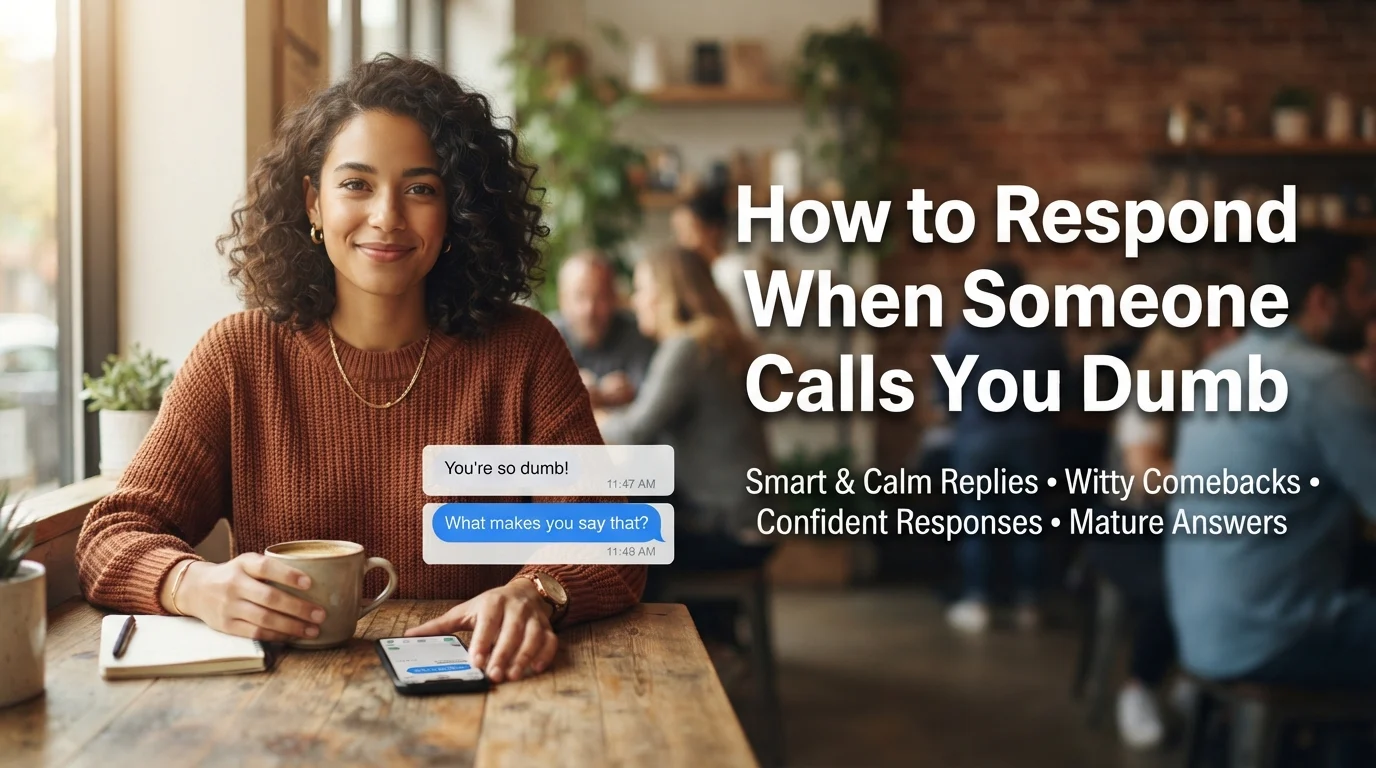
Being called “foolish” can feel insulting, embarrassing, or frustrating, especially when you were simply trying to express an opinion or make a mistake. Knowing how to respond when someone calls you foolish can help you protect your confidence without turning a small insult into a bigger argument. The best response often depends on who said it, why they said it, and how serious the situation is.
You do not always need a harsh comeback. Sometimes a calm response, a clever joke, or a firm boundary can communicate much more than an angry insult. Whether you want a mature reply, a funny comeback, a sarcastic response, or a confident way to shut down disrespect, these examples can help you choose words that fit the moment.
1. Stay Calm and Ask Why
Best for: When you want to understand what they actually mean.
Alternative: “What makes you say that?”
Examples:
“Why do you think I’m foolish?”
“What exactly did I say that made you think that?”
Instead of immediately reacting, ask them to explain themselves. This shifts the conversation from name-calling toward the actual issue.
2. Give a Confident Response
Best for: Situations where you want to show self-confidence.
Alternative: “I know my own abilities.”
Examples:
“Your opinion doesn’t define my intelligence.”
“I’m comfortable with what I know and what I’m still learning.”
A confident reply does not require you to insult the other person. Simply standing up for yourself can be enough.
3. Use a Simple “That’s Rude”
Best for: Casual situations where the insult is unnecessary.
Alternative: “That was unnecessary.”
Examples:
“Calling me foolish is pretty rude.”
“You could make your point without insulting me.”
This response is short, mature, and makes it clear that disrespect is not acceptable.
4. Respond With Humor
Best for: Friends or people who were joking rather than genuinely trying to hurt you.
Alternative: “Good thing I’m not taking your comedy career seriously.”
Examples:
“Wow, straight to the intelligence department today?”
“I’ll add that to my list of unsolicited reviews.”
A little humor can take the power out of an insult when the situation is lighthearted.
5. Say You Made a Mistake
Best for: When you genuinely got something wrong.
Alternative: “I made a mistake, but that doesn’t make me foolish.”
Examples:
“Yeah, I got that one wrong. It happens.”
“I made a mistake; thanks for pointing it out.”
Acknowledging an error shows maturity while refusing to accept an unfair personal attack.
6. Ask Them to Focus on the Issue
Best for: Arguments or disagreements.
Alternative: “Let’s discuss the point instead of attacking me.”
Examples:
“If you disagree, explain why.”
“Let’s talk about the idea rather than calling names.”
This keeps the conversation focused on facts instead of insults.
7. Use a Clever Comeback
Best for: When you want a witty but controlled response.
Alternative: “Interesting argument. Do you have anything more useful?”
Examples:
“Name-calling usually starts when the argument runs out of ideas.”
“Is ‘foolish’ your entire argument?”
A clever comeback can make your point without becoming unnecessarily cruel.
8. Say “I Disagree”
Best for: When someone is judging your opinion.
Alternative: “You’re entitled to your opinion.”
Examples:
“I disagree with your assessment of me.”
“You can think that, but I don’t agree.”
This approach is useful when you want to avoid a pointless argument.
9. Set a Clear Boundary
Best for: Repeated insults from someone you know.
Alternative: “Please speak to me respectfully.”
Examples:
“I’m willing to talk, but not if you insult me.”
“If you want a conversation, leave the name-calling out of it.”
A clear boundary tells the other person exactly what behavior you will and will not accept.
10. Respond With “Prove It”
Best for: Playful debates or confident conversations.
Alternative: “What evidence do you have?”
Examples:
“Okay, what makes you think that?”
“Go ahead and explain your reasoning.”
This can turn an empty insult into an opportunity for the other person to explain their claim.
11. Don’t Take the Bait
Best for: Online arguments and trolls.
Alternative: “I’m not interested in arguing.”
Examples:
“Think whatever you want.”
“I’m not wasting my time on insults.”
Sometimes the strongest comeback is refusing to participate.
12. Use a Sarcastic Reply
Best for: Friendly banter where sarcasm is already part of the relationship.
Alternative: “Thanks for the expert analysis.”
Examples:
“Wow, such a detailed intellectual assessment.”
“I’ll be sure to consult you next time.”
Keep sarcasm playful rather than personal so the situation does not escalate.
13. Turn It Into a Learning Moment
Best for: When someone criticizes something you genuinely don’t know.
Alternative: “Then teach me instead of insulting me.”
Examples:
“If I’m wrong, explain it to me.”
“I’m happy to learn, but insults don’t help.”
This response shows confidence while remaining open to improvement.
14. Tell Them Their Words Don’t Define You
Best for: Hurtful comments from someone whose opinion matters to you.
Alternative: “I know who I am.”
Examples:
“You calling mefoolish doesn’t make it true.”
“My intelligence isn’t determined by one person’s opinion.”
This is especially helpful when an insult starts affecting your self-esteem.
15. Keep Your Reply Short
Best for: When you do not want a long confrontation.
Alternative: “Okay.”
Examples:
“That’s your opinion.”
“Noted.”
A brief answer can prevent the conversation from becoming more dramatic than necessary.
16. Respond With “Let’s Be Respectful”
Best for: Workplace, school, or group situations.
Alternative: “We can disagree respectfully.”
Examples:
“Let’s keep this conversation respectful.”
“I’m happy to discuss the issue without insults.”
This is a professional way to deal with disrespect while keeping communication productive.
17. Ask If They Are Joking
Best for: When you’re unsure whether the comment was serious.
Alternative: “Are you joking?”
Examples:
“Wait, are you actually serious?”
“Was that supposed to be funny?”
Sometimes people make careless comments without realizing how they sound. Asking directly can clarify their intention.
18. Use a Lighthearted Comeback
Best for: Friends and casual conversations.
Alternative: “At least I’m entertaining.”
Examples:
“foolish but somehow still keeping this conversation interesting.”
“I may be confused, but I’m having fun.”
A playful response works best when there is no serious hostility behind the comment.
19. Tell Them to Be Specific
Best for: Constructive disagreements.
Alternative: “What exactly was wrong?”
Examples:
“Tell me what I misunderstood.”
“Which part do you disagree with?”
Being specific prevents vague insults from dominating the conversation.
20. Say “That Was Uncalled For”
Best for: Unexpected personal attacks.
Alternative: “You didn’t need to say that.”
Examples:
“That was uncalled for.”
“You could have corrected me without insulting me.”
This response calmly identifies the problem without adding another insult.
21. Don’t Return the Insult
Best for: When you want to maintain your dignity.
Alternative: “I’m not going to insult you back.”
Examples:
“I could insult you too, but that won’t solve anything.”
“I’d rather have a conversation than trade insults.”
Responding without retaliation can keep an argument from spiraling.
22. Use a Strong but Respectful Comeback
Best for: Someone deliberately trying to belittle you.
Alternative: “Respectfully, that says more about your behavior than my intelligence.”
Examples:
“Disagreeing with me doesn’t require disrespect.”
“You can challenge my opinion without putting me down.”
A firm response can establish confidence without becoming abusive.
23. Laugh It Off
Best for: Very casual teasing among close friends.
Alternative: “Good one.”
Examples:
“Okay, that actually made me laugh.”
“I’ll pretend that didn’t hurt my brilliant reputation.”
Laughing can work when you genuinely know the comment is harmless and you are comfortable with the person.
24. Tell Them You Won’t Continue the Conversation
Best for: Persistent or aggressive insults.
Alternative: “I’m ending this conversation.”
Examples:
“We can talk later when we’re both respectful.”
“I’m not continuing while you’re speaking to me like that.”
Leaving an unhealthy conversation is sometimes more effective than finding the perfect comeback.
25. Respond to a Partner Calmly
Best for: Arguments with a boyfriend, girlfriend, spouse, or partner.
Alternative: “I want us to disagree without insulting each other.”
Examples:
“I care about what you think, but calling me foolish isn’t okay.”
“Let’s talk about what happened instead of attacking each other.”
Personal relationships need especially careful communication because insults can damage trust over time.
26. Respond to a Friend
Best for: A friend who crossed the line.
Alternative: “Seriously? You know that’s not okay.”
Examples:
“Come on, you can disagree with me without calling me foolish.”
“I know we’re joking, but that one wasn’t funny to me.”
Friends may tease each other, but you are still allowed to communicate when something bothers you.
27. Respond at Work
Best for: Professional environments.
Alternative: “I’d appreciate keeping this professional.”
Examples:
“Please focus on the work rather than making personal comments.”
“If there’s an issue with my work, tell me specifically what needs fixing.”
At work, keeping your response factual and professional is usually more useful than trading personal insults.
28. Respond to an Online Comment
Best for: Social media, forums, gaming, or messaging.
Alternative: “You don’t know me well enough to make that judgment.”
Examples:
“Disagree with my point if you want, but leave the personal attacks out.”
“I’m here for the discussion, not the insults.”
Online conversations can escalate quickly, so a short response—or no response at all—can protect your peace.
29. Use Silence as Your Response
Best for: People who clearly want a reaction.
Alternative: Ignore the comment and move on.
Examples:
Read the message and don’t respond.
“Okay.”
Not every insult deserves your attention. If someone is deliberately provoking you, silence can prevent them from getting the reaction they want.
30. Choose Confidence Over Anger
Best for: Almost any situation involving disrespect.
Alternative: “I know my worth, and I don’t need to prove it.”
Examples:
“You’re allowed to have your opinion. I don’t need to argue about it.”
“I know I’m capable, so I’m not going to let one insult define me.”
The goal is not always to find the most dreadful comeback. Sometimes the most effective response is the one that protects your confidence and keeps the situation under control.
FAQs About How to Respond When Someone Calls You foolish
1. What should I say when someone calls me foolish?
You can say, “That’s your opinion, but I don’t appreciate being spoken to that way.” If you want something shorter, try, “You can disagree with me without insulting me.”
2. What’s a good comeback when someone calls you foolish?
A clever response could be, “If you disagree, explain your point instead of calling names.” For a lighter situation, you could say, “Is that the best argument you’ve got?”
3. How do I respond without being rude?
Stay calm, acknowledge the actual issue if there is one, and set a boundary. For example: “I may have made a mistake, but there’s no need to insult me.”
4. Should I ignore someone who calls me foolish?
Ignoring the comment can be appropriate when someone is clearly trying to provoke you, especially online. You do not have to respond to every insult.
5. How can I respond confidently without starting an argument?
Keep your response short and focus on respect. Try saying, “We can disagree, but let’s keep the conversation respectful.”
Conclusion
Knowing how to respond when someone calls you foolish is less about having the harshest comeback and more about choosing a response that fits the situation. A calm question, funny reply, confident statement, or firm boundary can all work depending on the relationship and context.
Remember that making a mistake does not make you unintelligent, and someone else’s insult does not automatically define your abilities. Choose words that protect your dignity, avoid unnecessary escalation, and communicate how you expect to be treated. Whether you prefer a funny comeback, smart response, dreadful-but-controlled reply, or mature answer, the best response is one that feels authentic to you.

I am Martin Joseph, a passionate writer who enjoys creating helpful, thoughtful, and engaging replies. I aim to make conversations easier by sharing practical responses for every situation.