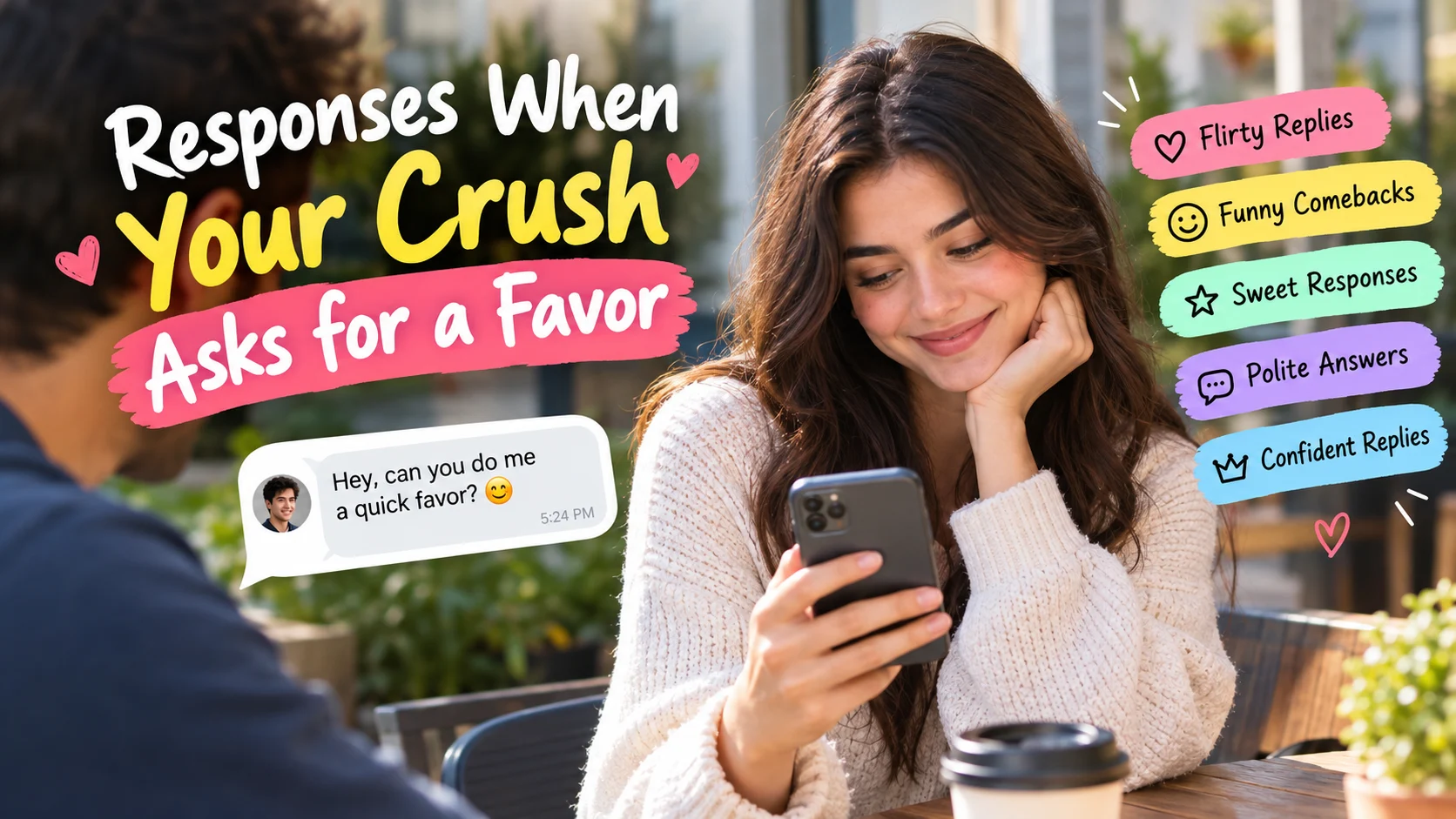
Having your crush ask you for a favor can feel exciting, flattering, and a little confusing. You may want to help them while also wondering what their request means, especially if you are hoping to become closer. The best response depends on the favor, your comfort level, and the kind of connection you want to build.
Whether the request is simple, thoughtful, playful, or unexpected, you can respond warmly without overthinking every word. These responses when your crush asks for a favor can help you sound kind, confident, flirty, funny, or politely firm while keeping the conversation natural.
1. Say “Of Course” With Confidence
Best for: Simple favors you genuinely want to do.
Alternative: “Sure, I’d be happy to.”
Examples:
“Of course! What do you need?”
“Sure, I’ve got you.”
A confident “of course” shows that you are comfortable helping without making the favor seem like a huge deal.
2. Keep It Sweet and Simple
Best for: Casual conversations with your crush.
Alternative: “Sure thing!”
Examples:
“Sure, what can I do for you?”
“Absolutely, just tell me what you need.”
A short response keeps things relaxed and avoids making a simple request feel complicated.
3. Add a Little Flirting
Best for: When you already have playful chemistry.
Alternative: “For you? Maybe.”
Examples:
“Anything for you… within reason.”
“Hmm, I might make an exception for you.”
A light flirt can make the interaction more memorable without being overly obvious.
4. Ask What They Need First
Best for: When your crush has not explained the favor yet.
Alternative: “What’s the favor?”
Examples:
“Sure, what do you need help with?”
“Okay, tell me what you have in mind.”
This gives you time to understand the request before committing.
5. Respond Playfully
Best for: A crush who enjoys joking around.
Alternative: “What kind of trouble are we getting into?”
Examples:
“Depends… how big is this favor?”
“Okay, but should I be worried?”
Humor keeps the conversation fun and gives you an opportunity to learn more.
6. Say You’re Happy to Help
Best for: When you sincerely want to support them.
Alternative: “I’m glad you asked.”
Examples:
“Of course, I’m happy to help.”
“I’d be glad to do that for you.”
This response sounds caring without being overly romantic.
7. Turn It Into a Cute Moment
Best for: When the conversation already feels affectionate.
Alternative: “You know I can’t say no to you.”
Examples:
“You really know how to get me to help you.”
“I guess you found the right person to ask.”
A playful answer can create a little romantic tension while staying natural.
8. Ask for More Details
Best for: Favors that involve planning or effort.
Alternative: “Tell me exactly what you need.”
Examples:
“Sure. When do you need it?”
“Okay, give me the details first.”
Clarifying the request prevents misunderstandings and shows that you are being thoughtful.
9. Offer Help Without Overcommitting
Best for: When you want to help but have limited time.
Alternative: “I can probably help with that.”
Examples:
“I can help for a little while.”
“I should be able to help, depending on when you need it.”
This keeps your response kind while protecting your time.
10. Make Them Smile
Best for: Lighthearted conversations.
Alternative: “What do I get in return?”
Examples:
“Okay, but I accept payment in snacks.”
“I’ll help, but you owe me a coffee.”
A harmless joke can make a normal favor feel more personal and fun.
11. Give a Flirty “Maybe”
Best for: When you want to tease your crush.
Alternative: “Convince me.”
Examples:
“Maybe… what’s your offer?”
“I might help if you ask nicely.”
This works especially well when both of you already enjoy playful banter.
12. Be Honest About Your Availability
Best for: When you are busy.
Alternative: “I can help later.”
Examples:
“I’m tied up right now, but I can help tonight.”
“I can’t do it at the moment, but maybe tomorrow.”
Being honest is better than promising something you cannot deliver.
13. Politely Decline
Best for: Favors you genuinely cannot or do not want to do.
Alternative: “I’m sorry, I can’t help with that.”
Examples:
“I wish I could, but I’m not able to.”
“Sorry, I can’t take that on right now.”
You do not have to say yes just because your crush asked.
14. Set a Friendly Boundary
Best for: Requests that make you uncomfortable.
Alternative: “I’m not comfortable doing that.”
Examples:
“I’d rather not get involved with that.”
“That’s something I’m going to have to say no to.”
A respectful boundary can actually make your communication clearer and healthier.
15. Ask If They Need You Personally
Best for: When the favor sounds unusual or vague.
Alternative: “Do you need me specifically?”
Examples:
“Is there a reason you wanted me to do it?”
“Do you need my help specifically, or could someone else handle it?”
This can help you understand why they chose you.
16. Show That You Care
Best for: A crush who may genuinely need support.
Alternative: “I’m here for you.”
Examples:
“Of course. If you need help, I’m here.”
“Sure, let’s see how I can help.”
Supportive responses can strengthen trust and emotional connection.
17. Use a Cute Compliment
Best for: Flirty conversations.
Alternative: “You ask so nicely.”
Examples:
“How could I say no to that smile?”
“You make asking for favors look pretty cute.”
Keep compliments natural so they do not feel forced.
18. Ask for a Small Favor in Return
Best for: Friendly teasing.
Alternative: “You owe me one.”
Examples:
“Sure, but I’m collecting a favor from you later.”
“Deal, but remember that you owe me.”
This creates playful back-and-forth without making the interaction too serious.
19. Respond With “I’ll Try”
Best for: When you want to help but cannot guarantee success.
Alternative: “I’ll see what I can do.”
Examples:
“I’ll try my best to help.”
“I can’t promise anything, but I’ll see what I can do.”
This is honest and prevents unrealistic expectations.
20. Make the Favor a Conversation Starter
Best for: When you want to spend more time talking to your crush.
Alternative: “Tell me more about it.”
Examples:
“Sure. What happened?”
“Okay, now I’m curious—what do you need help with?”
A favor can naturally open the door to a longer conversation.
21. Be Warm Without Sounding Too Eager
Best for: Early-stage crushes.
Alternative: “Yeah, I can probably help.”
Examples:
“Sure, I don’t mind helping.”
“Yeah, tell me what you need.”
You can show interest while still maintaining a relaxed tone.
22. Respond With Humor
Best for: A funny or unexpected favor.
Alternative: “You picked the wrong person!”
Examples:
“Are you sure you trust me with this?”
“Okay, but this could become a very questionable decision.”
Humor can reduce awkwardness and keep the interaction comfortable.
23. Ask When They Need It
Best for: Time-sensitive favors.
Alternative: “When do you need this done?”
Examples:
“Sure, when do you need my help?”
“Is this for today or can it wait?”
This helps you decide whether the request fits your schedule.
24. Say Yes Without Making It Romantic
Best for: When you want to remain friendly.
Alternative: “No problem.”
Examples:
“Sure, no worries.”
“Yeah, I can help with that.”
Sometimes the best crush response is simply friendly and straightforward.
25. Show Appreciation for Their Trust
Best for: Personal or meaningful favors.
Alternative: “Thanks for trusting me.”
Examples:
“I appreciate you asking me.”
“Sure. Thanks for trusting me with this.”
This response acknowledges that the request may be important to them.
26. Make It a Little Mysterious
Best for: Playful flirting.
Alternative: “Maybe I can help.”
Examples:
“I might have a solution for you.”
“Maybe I can save the day.”
A little mystery can make the conversation more engaging without becoming confusing.
27. Offer an Alternative
Best for: When you cannot fulfill the exact favor.
Alternative: “I can’t do that, but I can help another way.”
Examples:
“I can’t come over, but I can walk you through it.”
“I can’t do it today, but I can help you tomorrow.”
Offering another solution shows consideration while keeping your boundary intact.
28. Ask Why They Chose You
Best for: When you are curious about their intentions.
Alternative: “Why me?”
Examples:
“Out of everyone you could ask, why did you choose me?”
“Okay, I’m curious—why did you think of me?”
Their answer may give you useful context about how they see your relationship.
29. Keep It Confident and Casual
Best for: Almost any everyday favor.
Alternative: “Sure, I can handle that.”
Examples:
“Yeah, I’ve got it.”
“Sure, leave it with me.”
Confidence makes your response feel natural instead of nervous or overly eager.
30. Turn the Favor Into a Chance to Connect
Best for: When you genuinely want to spend more time together.
Alternative: “Sure, maybe we can do it together.”
Examples:
“I can help—want to grab coffee afterward?”
“Sure. We could work on it together if you want.”
If the situation feels right, a simple favor can naturally become an opportunity to spend more time with your crush.
FAQs About Responses When Your Crush Asks for a Favor
1. What should I say when my crush asks me for a favor?
Start by understanding what they need. A simple response such as “Sure, what do you need?” is friendly, confident, and gives you time to decide whether you can help.
2. Should I always say yes when my crush asks for help?
No. You can say yes when you genuinely want to help, but you can also politely decline or offer an alternative if the request is inconvenient or makes you uncomfortable.
3. How can I make my response flirty?
Try light teasing or a playful line such as “For you? Maybe I can make an exception.” Keep the flirting appropriate to the existing dynamic between you.
4. How do I know if my crush is using the favor as an excuse to talk to me?
One favor alone does not establish their intentions. Look at the broader pattern of communication, such as whether they regularly initiate conversations, seek your company, or make an effort to stay connected.
5. What if I want to help but do not have time?
Be honest. You can say, “I can’t right now, but I might be able to help later.” This lets you be supportive without sacrificing your own commitments.
Conclusion
Knowing how to respond when your crush asks for a favor is less about finding the perfect sentence and more about matching your response to the situation. You can be helpful, playful, flirty, friendly, or firm depending on what feels comfortable to you.
The most natural crush responses are honest and relaxed. Whether you say “Of course,” tease them with a funny comeback, ask for more details, or politely set a boundary, confidence matters more than having a perfectly crafted line. Choose a response that feels genuine and lets the conversation develop naturally.

I’m Victor Daniel, a passionate writer at ReplyLop. I enjoy creating helpful, friendly, funny, and thoughtful replies that make conversations easier, clearer, and more engaging.