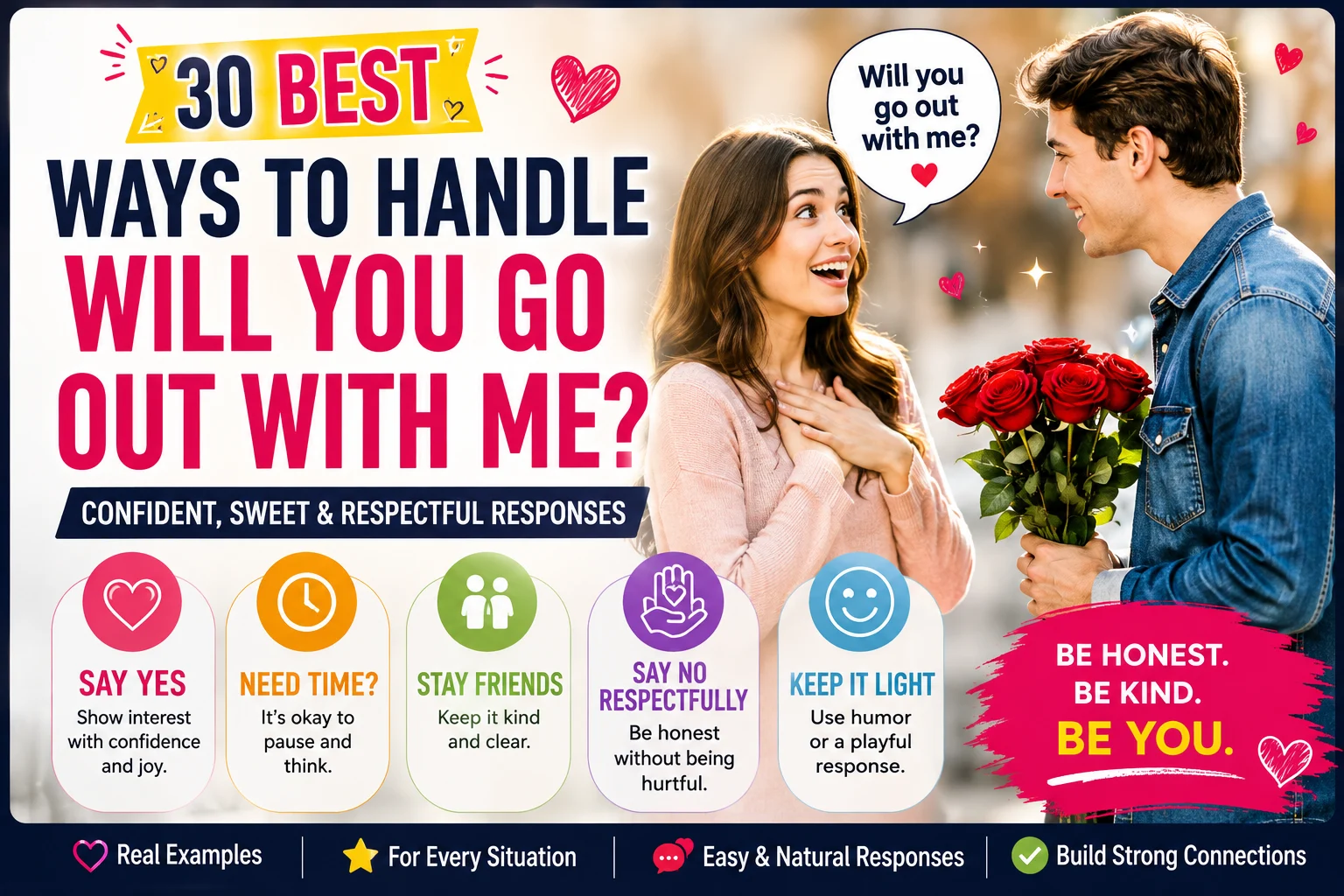
When someone asks, “Will you go out with me?”, it can feel exciting, surprising, awkward, or even a little overwhelming. Your answer does not have to be complicated. if you like the person, need more time, want to stay friends, or simply are not interested, the best response is one that feels honest and comfortable for you.
Knowing the right ways to handle “will you go out with me?” can make these moments much easier. A thoughtful response can show interest without sounding too eager, set boundaries without being rude, or keep things light when you are unsure. The key is to respond with confidence, kindness, and respect for both yourself and the other person.
1. Say Yes When You Truly Like Them
If you already have feelings for the person, a simple and genuine “yes” may be all you need. You do not have to create a clever response when your feelings are clear.
Best for: Someone you already like and feel comfortable dating.
Alternative: “I’d really like that. When were you thinking?”
Examples:
- “Yes! I’d love to go out with you.”
- “Absolutely. I’ve actually been hoping you’d ask.”
A confident yes makes your interest clear while keeping the moment natural.
2. Give a Cute and Playful Yes
A playful answer can make the conversation more memorable, especially when you already share a fun connection.
Best for: Flirty conversations and people who enjoy joking around.
Alternative: “Hmm… I suppose I could say yes.”
Examples:
- “Is that your way of asking me on a date?”
- “Well, since you asked so nicely… yes!”
A little humor can reduce nervousness and make the exchange feel relaxed.
3. Be Honest If You Need Time
You are never required to answer immediately. If the question catches you off guard, asking for time is perfectly reasonable.
Best for: Situations where you are unsure about your feelings.
Alternative: “Can I think about it and get back to you?”
Examples:
- “I wasn’t expecting that, so can I have a little time to think?”
- “I’m not sure yet, but I’d like to think about it.”
Taking time can help you make a decision based on what you genuinely want.
4. Say You Are Interested but Want to Take It Slowly
Sometimes you like someone but do not want to rush into a relationship. You can communicate interest while establishing your preferred pace.
Best for: New connections and cautious dating situations.
Alternative: “I like you, but I’d rather take things slowly.”
Examples:
- “I’d like to go out with you, but I want to take things one step at a time.”
- “I’m interested. Let’s start with a casual date and see how it goes.”
This response keeps the door open without creating pressure.
5. Suggest a Casual First Date
If “going out” sounds too serious, suggest something simple. A coffee, walk, lunch, or casual activity can make the situation feel less intimidating.
Best for: People who prefer low-pressure first dates.
Alternative: “How about coffee sometime instead?”
Examples:
- “Sure! How about we grab coffee this weekend?”
- “I’d be up for a casual lunch together.”
A simple first date can help both people decide whether they want to continue seeing each other.
6. Say Yes Without Overexplaining
Sometimes the strongest response is also the shortest. If you are comfortable saying yes, there is no need to give a long explanation.
Best for: Confident and straightforward conversations.
Alternative: “Yes, I’d like that.”
Examples:
- “Yes, definitely.”
- “I’d love to go out with you.”
Keeping your response simple can make the moment feel natural rather than rehearsed.
7. Ask What They Mean by “Go Out”
The phrase “go out” can mean different things to different people. Asking for clarification can prevent misunderstandings.
Best for: Situations where the person’s intentions are unclear.
Alternative: “Do you mean a date?”
Examples:
- “When you say go out, do you mean you want to go on a date?”
- “Just so I understand, are you asking me out romantically?”
Clear communication is especially useful when you are unsure whether the person means dating or simply spending time together.
8. Respond With a Flirty Answer
If you are interested and want to show attraction, a playful or flirty response can make your feelings obvious.
Best for: Romantic chemistry and comfortable conversations.
Alternative: “I thought you’d never ask.”
Examples:
- “Maybe… if you promise to make it a good date.”
- “I was wondering when you were finally going to ask me.”
Flirting works best when it matches your personality and the tone you already share.
9. Say No Kindly
You can reject a date without insulting or embarrassing the other person. A polite, direct response is usually best.
Best for: When you know you are not romantically interested.
Alternative: “Thank you for asking, but I don’t think we’re a match.”
Examples:
- “I really appreciate you asking, but I don’t feel the same way.”
- “That’s kind of you, but I’m going to say no.”
You do not owe someone a detailed explanation for declining a date.
10. Say You Prefer to Stay Friends
If you value the person but do not want a romantic relationship, clearly communicate that preference.
Best for: Friendships where romantic feelings are not mutual.
Alternative: “I care about you, but I see us as friends.”
Examples:
- “I really enjoy spending time with you, but I’d rather stay friends.”
- “You mean a lot to me, but I don’t see us dating.”
Being honest can prevent confusion and unrealistic expectations.
11. Use a Gentle Response When You Are Nervous
Nervousness is completely normal when someone asks you out. You can acknowledge it rather than pretending you are completely calm.
Best for: Unexpected romantic questions.
Alternative: “Wow, you caught me off guard!”
Examples:
- “I’m honestly a little nervous, but I think I’d like that.”
- “I didn’t expect you to ask, but that actually makes me happy.”
Showing a little vulnerability can make your response feel genuine.
12. Turn the Question Into a Fun Conversation
Instead of immediately answering, you can playfully ask what inspired the invitation.
Best for: Lighthearted conversations where you already feel comfortable.
Alternative: “What made you decide to ask me?”
Examples:
- “That’s an interesting question. What changed your mind?”
- “Now I’m curious—what made you want to take me out?”
This can create a natural conversation before you make your decision.
13. Say Yes While Asking for the Details
If you are interested, move the conversation forward by asking about the plan.
Best for: Someone you genuinely want to date.
Alternative: “Sure. What did you have in mind?”
Examples:
- “Yes! Where are you thinking of taking me?”
- “I’d like that. When should we plan it?”
This gives the other person an opportunity to suggest a specific date and activity.
14. Ask for a Little More Time to Get Comfortable
You may like someone but still feel uncertain about dating them. It is okay to set a slower pace.
Best for: People who want emotional space before dating.
Alternative: “I like talking to you, but I want to get to know you better first.”
Examples:
- “I’m interested, but I’d feel better if we spent a little more time getting to know each other.”
- “I’m open to it, but I don’t want to rush.”
A thoughtful boundary can create a healthier beginning.
15. Give a Respectful No Without Making Excuses
It can be tempting to invent an excuse when you do not want to date someone. A straightforward answer is often kinder.
Best for: Clear romantic rejection.
Alternative: “I appreciate the invitation, but I’m not interested in dating.”
Examples:
- “Thanks for asking, but I don’t think I want to date.”
- “I’m flattered, but I’ll have to say no.”
Honesty avoids giving someone false hope about future possibilities.
16. Say You Are Already Seeing Someone
If you are already dating someone or committed to another relationship, you can simply explain that you are unavailable.
Best for: When another relationship is the reason you cannot accept.
Alternative: “I’m currently seeing someone, so I can’t accept.”
Examples:
- “I appreciate you asking, but I’m already in a relationship.”
- “That’s sweet of you, but I’m seeing someone.”
There is no need to criticize the person who asked or compare them with your partner.
17. Use a Warm but Neutral Response
If you do not know exactly how you feel, stay neutral instead of giving a confusing yes or no.
Best for: Uncertain situations.
Alternative: “I’m not sure how I feel yet.”
Examples:
- “I’m glad you asked, but I need some time to figure out how I feel.”
- “I’m open to talking about it, but I’m not ready to give you an answer yet.”
This allows you to protect your emotional boundaries.
18. Respond When You Are Interested but Busy
Being busy does not necessarily mean you are rejecting someone. If you want to go out, suggest another time.
Best for: People with genuinely busy schedules.
Alternative: “I’d like to, but this week is hectic. How about next weekend?”
Examples:
- “Yes, but I’m tied up this week. Could we plan something next Saturday?”
- “I’d love to. Can we find a time that works for both of us?”
Offering an alternative date shows that your interest is genuine.
19. Keep It Short When the Situation Feels Awkward
Sometimes a long response can make an uncomfortable moment even more uncomfortable. A brief, respectful answer is enough.
Best for: Awkward or unexpected conversations.
Alternative: “Thanks, but I’ll pass.”
Examples:
- “I appreciate you asking, but no thanks.”
- “That’s kind of you, but I don’t think so.”
Short answers can be especially helpful when you want to avoid unnecessary discussion.
20. Use Humor Without Giving False Hope
Humor can make a difficult conversation easier, but avoid jokes that could make the other person think you actually said yes.
Best for: People who naturally communicate through humor.
Alternative: “You definitely caught me by surprise!”
Examples:
- “That question came out of nowhere!”
- “I need a moment to process that proposal!”
If you are actually declining, follow the humor with a clear answer.
21. Say Yes if You Want to Explore the Connection
You do not need to know whether someone is your future partner before accepting a first date. Sometimes a date is simply a chance to learn more about each other.
Best for: Early-stage attraction and curiosity.
Alternative: “I’d like to get to know you better.”
Examples:
- “Sure, I’d like to see where this goes.”
- “I’m interested. Let’s give it a chance.”
A first date does not have to come with expectations about the entire relationship.
22. Be Clear About Your Boundaries
If you accept a date, you can still communicate what makes you comfortable. Healthy dating includes respect for personal boundaries.
Best for: Anyone who wants to establish expectations early.
Alternative: “I’m interested, but I prefer keeping the first date simple.”
Examples:
- “I’d like to meet somewhere public for the first date.”
- “I’m happy to go out, but I’d like to keep things casual at first.”
Clear boundaries can make dating feel safer and more comfortable.
23. Decline if You Feel Pressured
You should never accept a date simply because someone is persistent, popular, attractive, or emotionally demanding.
Best for: Situations involving pressure or repeated requests.
Alternative: “I’ve made my decision, and I’d appreciate you respecting it.”
Examples:
- “I’m not comfortable with that, so I’m going to say no.”
- “I understand that you’re interested, but my answer is no.”
A respectful person should accept your decision without repeatedly pushing.
24. Respond to a Crush With Confidence
If your crush asks you out, nerves can make it difficult to find the right words. Remember that you do not need a perfect response.
Best for: Romantic crushes and long-standing attraction.
Alternative: “I was hoping you would ask.”
Examples:
- “Yes! I’d really like to go out with you.”
- “Honestly, that makes me pretty happy. Yes.”
Confidence does not mean pretending you are not nervous. It means being honest despite the nerves.
25. Respond Through Text
Texting gives you a little more time to choose your words. Keep the message natural rather than making it sound like a formal announcement.
Best for: Online conversations and text messages.
Alternative: “Sure 😊 What did you have in mind?”
Examples:
- “I’d love to! When are you free?”
- “Thanks for asking. I’d definitely be interested in going out.”
Your text should match the relationship and communication style you already have.
26. Handle a Date Request From a Friend
When a friend asks you out, the friendship can make the situation more complicated. Honesty is especially important.
Best for: Friends who express romantic interest.
Alternative: “I value our friendship too much to give you a misleading answer.”
Examples:
- “I care about you, but I think of you as a friend.”
- “I’m flattered, but I don’t want to change our friendship into a relationship.”
Kindness and clarity can help protect the friendship from unnecessary confusion.
27. Respond When You Are Interested but Not Ready for a Relationship
You can be attracted to someone without being ready for a committed relationship. Communicate that distinction clearly.
Best for: People who want connection without immediate commitment.
Alternative: “I’m interested in you, but I’m not ready for a serious relationship.”
Examples:
- “I’d enjoy going on a date, but I want to be honest that I’m not looking for anything serious right now.”
- “I like you, but I need to take things slowly.”
Honesty gives both people the information they need to decide whether dating makes sense.
28. Respond Respectfully When You Are Not Interested
Not every invitation will feel right, and that is completely normal. You can decline while still recognizing the courage it took for the person to ask.
Best for: A polite and mature rejection.
Alternative: “I appreciate your honesty, but I don’t feel a romantic connection.”
Examples:
- “Thank you for being honest with me, but I don’t feel the same way.”
- “I’m flattered that you asked, but I don’t think dating would be right for me.”
A kind rejection does not require you to apologize for your feelings.
29. Know When Not to Give a Detailed Explanation
When you say no, you may feel obligated to explain every reason. Usually, you do not need to.
Best for: Maintaining personal boundaries during rejection.
Alternative: “I don’t think dating is right for me, but I appreciate you asking.”
Examples:
- “I’d rather not get into the details, but I hope you understand.”
- “There isn’t one specific reason. I just don’t feel that way.”
A simple answer can be both honest and respectful.
30. Choose the Response That Feels Authentic to You
The best way to handle “will you go out with me?” is ultimately to respond according to your genuine feelings. There is no universal perfect answer.
Best for: Any dating situation where you want to communicate honestly.
Alternative: “Let me be honest about how I feel.”
Examples:
- “I like you, and I’d love to see where this goes.”
- “I appreciate you asking, but I don’t think dating is right for us.”
Your comfort, feelings, boundaries, and safety matter just as much as the other person’s feelings.
FAQs About Ways to Handle “Will You Go Out With Me?”
1. What is the best response to “Will you go out with me?”
The best response depends on how you genuinely feel. If you are interested, say yes clearly. If you are unsure, ask for time. If you are not interested, give a kind but direct no.
2. How do I say yes to someone asking me out?
You can keep it simple and natural. Try, “Yes, I’d love to,” or “Sure! What did you have in mind?” A confident answer does not need to be complicated.
3. How do I reject someone asking me out without hurting their feelings?
Be polite, direct, and avoid unnecessary criticism. You can say, “I really appreciate you asking, but I don’t feel the same way.” You cannot control how someone feels about rejection, but you can communicate respectfully.
4. What should I say if I am unsure about dating someone?
It is completely acceptable to ask for time. Try, “I wasn’t expecting that question. Can I think about it and get back to you?” This gives you space to make a decision without pressure.
5. Is it okay to ask what they mean by “go out”?
Yes. “Go out” can mean dating, spending time together casually, or starting a relationship. Asking, “Do you mean going on a date?” can prevent misunderstandings and make your intentions clearer.
Conclusion
Finding the right ways to handle “will you go out with me?” does not mean memorizing a perfect line. The most effective response is one that reflects your genuine feelings while respecting the other person’s emotions. Whether you say an enthusiastic yes, ask for more time, suggest a casual date, or politely decline, honesty and kindness should guide the conversation.
Remember that you are allowed to move at your own pace. You do not have to say yes because you feel pressured, and you do not need a complicated excuse to say no. Choose words that feel natural to you, communicate your boundaries clearly, and let the conversation develop from there.

I am Martin Joseph, a passionate writer who enjoys creating helpful, thoughtful, and engaging replies. I aim to make conversations easier by sharing practical responses for every situation.