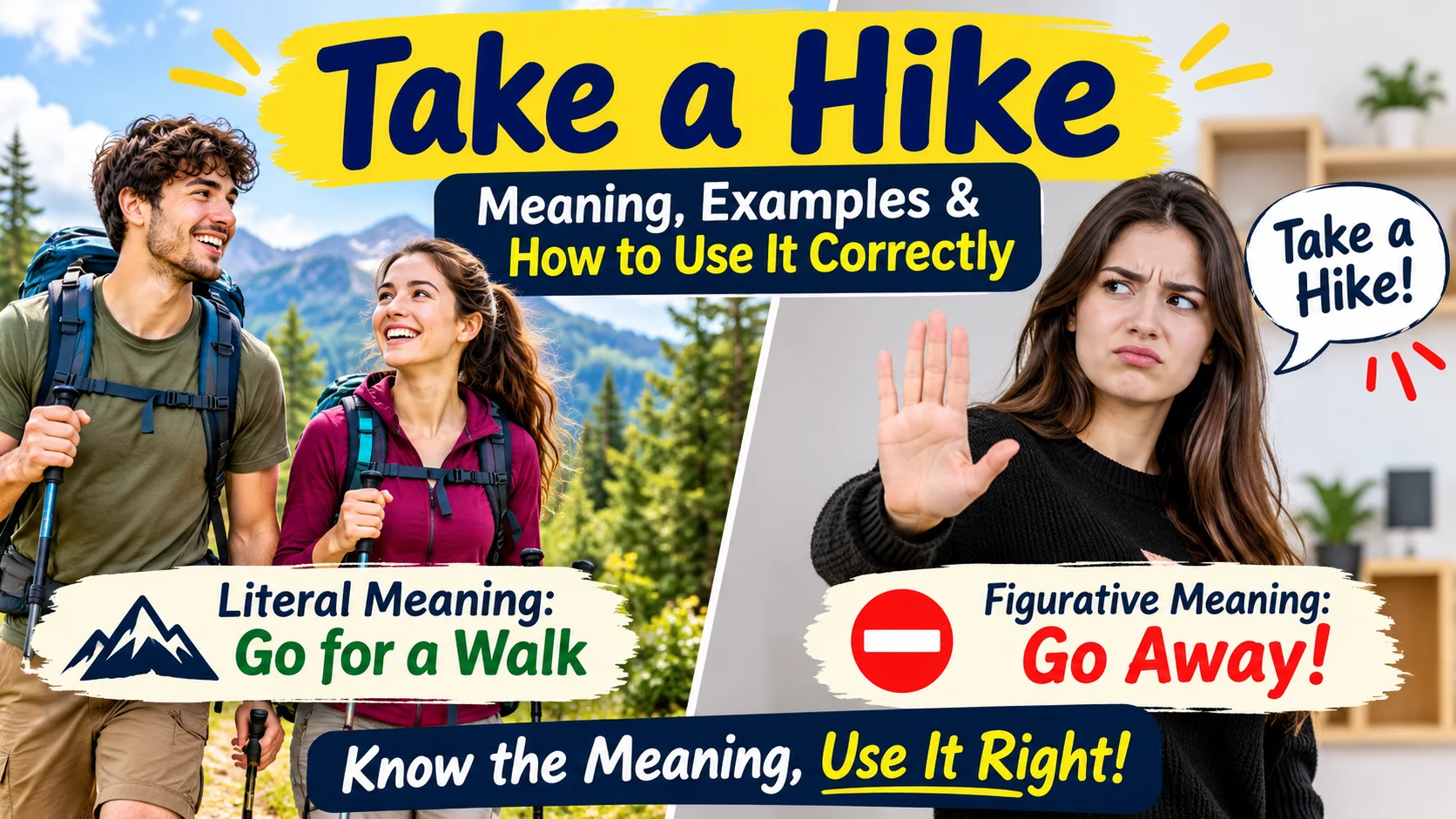
The expression “take a hike” is an informal English phrase that can have two different meanings depending on the context. Literally, it means to go for a long walk, usually outdoors or in nature. However, as an idiom, it means to go away, leave someone alone, or stop bothering someone. It can sound rude, dismissive, or even playful depending on the situation and the speaker’s tone.
English learners sometimes find this expression confusing because its literal meaning is completely different from its figurative meaning. For example, someone might say, “Let’s take a hike this weekend” when suggesting an outdoor activity. On the other hand, saying “Why don’t you take a hike?” to an annoying person is a blunt way of telling them to leave. Understanding the context, tone, and relationship between speakers helps you use this expression naturally and avoid misunderstandings.
Quick Answer: What Does Take a Hike Mean?
“Take a hike” is an informal English expression meaning either to go for a walk outdoors or, as an idiom, to leave someone alone or go away. When used figuratively, it can sound rude, dismissive, or humorous. Its intended meaning depends on the situation and tone.
Why Do People Confuse Take a Hike?
People confuse the expression because it has both a literal and an idiomatic meaning.
The literal meaning is straightforward: someone is going hiking or taking a walk outdoors.
The figurative meaning is different. It is a way of telling someone to leave, go away, or stop interfering.
Here are two examples:
- Literal: We decided to take a hike in the mountains on Sunday.
- Figurative: If you don’t like my decisions, you can take a hike!
Both sentences use the same expression, but their meanings are completely different.
First Word: Take
Take is a common English verb with several meanings. It can mean to carry something, accept something, choose something, or participate in an activity.
In the expression “take a hike,” the verb take helps form a phrase describing an activity.
Examples:
- I take a walk every morning.
- She wants to take a break.
- We should take a trip next month.
- They decided to take a hike together.
In everyday English, take frequently appears with nouns to describe activities and experiences.
Second Word: Hike
Hike is a noun and a verb associated with walking long distances, especially in natural areas such as forests, hills, mountains, and trails.
As a noun:
- We went on a long hike yesterday.
- The mountain hike was challenging.
As a verb:
- They hike every weekend.
- We plan to hike through the forest.
When combined with take, the words form the expression “take a hike,” which can describe an outdoor walking activity or an informal way to tell someone to go away.
Take a Hike: Literal vs. Figurative Meaning
| Feature | Literal Meaning | Figurative Meaning |
|---|---|---|
| Definition | Go for a walk outdoors | Go away or leave someone alone |
| Usage | Outdoor activities | Informal conversations |
| Tone | Neutral or positive | Often rude or dismissive |
| Context | Nature, exercise, travel | Arguments or disagreements |
| Example | Let’s take a hike. | Take a hike and leave me alone! |
When Should You Use Take a Hike?
The expression can be used in different situations depending on what you want to communicate.
1. When Talking About Outdoor Activities
Use “take a hike” when suggesting or describing a walk in nature.
Example: We should take a hike in the national park this weekend.
2. When Telling Someone to Go Away
Use the figurative expression when someone is annoying you or refusing to respect your boundaries.
Example: I told the rude stranger to take a hike.
Remember that this usage can sound unfriendly.
3. When Expressing Frustration
You can use it when you are angry or irritated with someone’s behavior.
Example: If he keeps insulting me, he can take a hike.
4. When Making a Joke
Friends sometimes use this expression humorously without intending to hurt anyone.
Example: Oh, take a hike! You’re making fun of my new haircut again.
5. When Setting Personal Boundaries
You can use it to tell someone to stop interfering in your personal matters.
Example: My neighbor kept asking personal questions, so I finally told him to take a hike.
15 Examples of Take a Hike in Sentences
Here are practical examples showing both meanings of the expression.
Literal Examples
- We decided to take a hike through the forest on Saturday morning.
- My family loves to take a hike whenever we visit the mountains.
- Let’s take a hike before the weather gets too hot.
- They took a hike along the beautiful mountain trail.
- I want to take a hike to enjoy the fresh air and peaceful scenery.
- The students took a hike as part of their outdoor education program.
- Would you like to take a hike with us this afternoon?
Figurative Examples
- If you keep bothering me, take a hike!
- He told the rude salesman to take a hike after several unwanted calls.
- I don’t need your negative comments, so take a hike.
- She finally told her dishonest friend to take a hike.
- If you cannot respect my privacy, you can take a hike.
- The angry customer told the persistent salesperson to take a hike.
- He wanted everyone to stop criticizing him, so he told them to take a hike.
- Take a hike! I’m not interested in your excuses anymore.
Common Mistakes When Using Take a Hike
English learners sometimes misunderstand this expression. Avoid these common mistakes.
1. Assuming It Always Means Walking
Incorrect understanding: “Take a hike” always means going outdoors.
Correct understanding: It can also mean telling someone to leave.
2. Using It in Formal Conversations
The figurative expression is informal and can sound disrespectful.
Instead of saying “Take a hike” to your manager, use a more polite expression such as:
- Please give me some space.
- I would prefer to be left alone.
- Could we discuss something else?
3. Ignoring the Speaker’s Tone
Tone can change how the expression is understood. Friends may use it playfully, while an angry person may use it as an insult.
4. Confusing It With Take a Walk
“Take a walk” usually refers to walking for exercise or relaxation. “Take a hike” can describe outdoor hiking or mean go away.
5. Forgetting the Context
Always consider the situation before deciding what someone means by this expression.
Memory Trick: How to Remember Take a Hike
Use this simple trick:
Think of two meanings:
- Hike = Nature: Imagine walking on a mountain trail.
- Hike = Go Away: Imagine telling an annoying person to leave.
Remember:
Take a hike = Go walking OR Go away.
The surrounding words and the speaker’s tone will help you identify the correct meaning.
Take a Hike in American vs. British English
“Take a hike” is understood in both American and British English.
However, its figurative use is particularly familiar in American informal English.
| Feature | American English | British English |
|---|---|---|
| Literal meaning | Go for a long outdoor walk | Go for a long outdoor walk |
| Figurative meaning | Go away or leave someone alone | Understood as go away |
| Formality | Informal | Informal |
| Common alternative | Get lost | Clear off |
| Example | Take a hike! | Clear off! |
The expression is not limited to one variety of English. Both American and British speakers can understand it, although alternative expressions may be more common in particular situations.
Similar Words and Expressions
Several English expressions have meanings similar to “take a hike.” However, their tones and levels of politeness can differ.
1. Get Lost
An informal and often rude way to tell someone to go away.
Example: Get lost! I don’t want to talk to you.
2. Go Away
A direct expression asking someone to leave.
Example: Please go away and let me finish my work.
3. Clear Off
An informal expression, particularly familiar in British English, meaning to leave.
Example: Clear off! This is private property.
4. Beat It
An informal and sometimes aggressive way of telling someone to leave.
Example: Beat it before I call security.
5. Leave Me Alone
A direct expression asking someone to stop bothering you.
Example: Please leave me alone for a while.
6. Get Out of Here
This expression can mean leave a place. It can also express surprise or disbelief in certain contexts.
Example: Get out of here! I can’t believe you won.
7. Hit the Road
An informal expression meaning to leave or begin a journey.
Example: It’s getting late, so we should hit the road.
Final Verdict: What Does Take a Hike Really Mean?
“Take a hike” has two main meanings:
- Literal meaning: To go for a long walk, especially outdoors.
- Figurative meaning: To tell someone to go away or leave you alone.
The expression is informal and its figurative meaning can sound rude, dismissive, or humorous depending on the situation.
Frequently Asked Questions (FAQs)
1. What does take a hike mean in slang?
In slang, “take a hike” means go away, leave someone alone, or stop bothering someone. It is an informal expression that can sound rude or dismissive.
Example: If you don’t like my opinion, take a hike!
2. Is take a hike a rude expression?
It can be rude when used to dismiss someone or tell them to leave. However, it is not rude when used in its literal meaning of going for an outdoor walk.
3. What is another way to say take a hike?
Some alternatives include “go away,” “get lost,” “leave me alone,” “clear off,” and “beat it.” The best choice depends on how polite or direct you want to sound.
4. Does take a hike mean go away?
Yes. As an idiom, “take a hike” means go away or stop bothering someone. It is commonly used in informal conversations.
5. What is the literal meaning of take a hike?
Its literal meaning is to go for a long walk, usually in a natural outdoor area such as a forest, mountain, or hiking trail.
6. Can you use take a hike jokingly?
Yes. Friends sometimes use it jokingly when teasing each other or expressing mild annoyance. However, the listener’s understanding depends on the relationship and tone.
7. Is take a hike an idiom?
Yes. “Take a hike” is an English idiom when it means telling someone to go away or leave you alone. Its literal meaning refers to going for an outdoor walk.
Remember This
- “Take a hike” has both literal and figurative meanings.
- Literally, it means to go for a long walk outdoors.
- Figuratively, it means to go away or leave someone alone.
- Its figurative meaning is informal and may sound rude.
- Context and tone help determine the intended meaning.
Conclusion
The expression “take a hike” is a useful example of how English phrases can have both literal and figurative meanings. It can describe an enjoyable outdoor activity, such as walking through a forest, or serve as a direct way to tell someone to leave you alone. Understanding the context makes it easier to recognize the intended meaning.
When using this expression, pay attention to your audience and tone. Use it freely when discussing outdoor adventures, but be careful with its figurative meaning because it can sound impolite. Learning expressions like this will help you understand everyday English conversations and communicate more naturally.

I am Martin Joseph, a passionate writer who enjoys creating helpful, thoughtful, and engaging replies. I aim to make conversations easier by sharing practical responses for every situation.